The Issue of Textile Pollution
In this post, we will explore, in some depth, many failures of the textile industry around the world, and in particular in Canada to stop its contributions to the climate crisis. We will also discuss the thought process that delivered us to choose this problem and solution to reduce global GHG emissions.
By Kassy Keats
Published on Fri Feb 27 2026
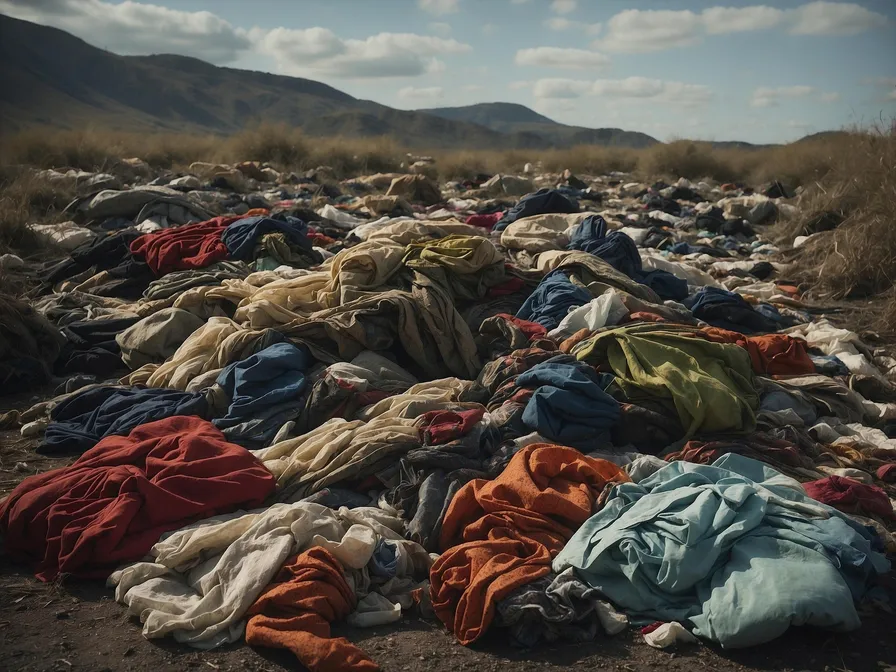 A landfill filled with textile waste
 When we think about pollution, images of plastic bottles, oil spills, or smog-filled skylines usually come to mind. Rarely do we picture our closets, yet the consequences are piling up in our landfills. Where do all these textiles go after they have been used? Why is textile pollution a rising and concerning issue?
A Growing Problem
Around 80 billion new pieces of clothing are produced every year. In Canada, a study from the University of Waterloo revealed that Canadians dispose of 500 million kilograms of fabric each year. With very limited avenues for textile recycling, it is estimated that 98% of plastic textile waste ends up in landfills. In Newfoundland and Labrador alone, textiles account for approximately 15 kilotonnes of waste each year across the province.
This issue extends beyond Canada. In 2018, 17 million tons of textile waste ended up in landfills, according to the EPA. While this figure reflects a broader North American problem, Canada is very much part of the same system of fast production, fast consumption, and fast disposal.
Why Textile Waste is so Harmful
Unlike other forms of waste, such as food waste and paper, textiles do not simply break down and disappear. Fifty-four percent of textiles contain synthetic fibers, which are difficult to decompose, making them a persistent and continual issue for the environment. In fact, textiles can take up to 200+ years to decompose in landfills.
The impact goes even further. The textile industry is responsible for 1.2 billion tonnes of CO₂ equivalent per year and accounts for 8-10% of global greenhouse gas emissions. Even donation is not a complete solution. Only half of the textiles donated to thrift stores are able to be resold, and of the clothing that reaches the thrift store floor, another half cannot be sold. This unsold clothing is often sold to a sorting company outside of the province and then sent to Global South countries, effectively exporting our textile waste elsewhere.
How We are Responding
NLight Recycling aims to combat textile pollution through textile-to-textile recycling, breaking down textiles into raw materials, extracting dyes, and reclaiming fibers.
NLight Recycling has the potential to:
- Reduce greenhouse gas emissions by approximately 6 tonnes of CO₂e per tonne of textile waste
- Reduce wastewater: the fast fashion industry is responsible for around 20% globally
- Reduce microplastics in the oceans: textiles account for approximately 10%
- Support the creation of local jobs in Newfoundland and Labrador
Combating the textile pollution crisis is critical. By 2050, clothing and textiles alone could use up more than a quarter of the world’s total allowable emissions. Textile pollution may begin in our closets, but its impacts extend far beyond them- making it an issue that can no longer be ignored.