NLight Recycling’s Mission: Rethinking Textile Waste in Newfoundland & Labrador
The fashion industry produces millions of tons of textile waste every year, yet less than one percent is recycled back into new clothing. This broken system is fueling pollution on a massive scale, making textile-to-textile recycling not just an innovation but a necessity in Canada.
By Kassy Keats
Published on Fri Apr 03 2026
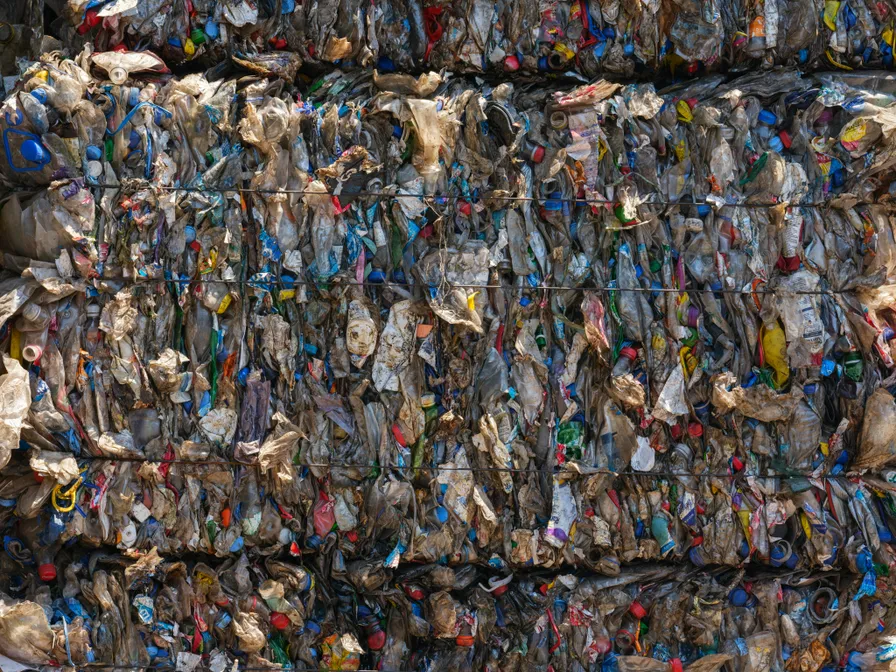 Bales of waste
 A Student-Led Response to a Growing Problem
NLight Recycling Inc. is a student-founded clean-growth initiative based in Newfoundland and Labrador. The idea for NLight emerged during the econext Ideathon 2025, where our team set out to address rising GHG emissions in the province. As we researched potential solutions, we were struck by the scale of textile pollution and by the lack of initiatives and solutions to the issue.
Textile waste presents a unique and persistent environmental challenge. Most fabrics are difficult to recycle, and textiles can take up to 200+ years to decompose in landfills. In 2018 alone, approximately 17 million tons of textile waste ended up in landfills.
That discovery became our call to action. NLight Recycling is working to rethink what happens to clothing at the end of its life by developing a localized, circular textile recycling model. Our goal is to transform discarded garments into valuable, reusable raw materials, keeping textiles in circulation and out of landfills. As part of this model, textiles undergo washing, drying, and a fabric opening process that converts garments into opened fibres. These opened fabrics can serve as early-stage outputs and be sold for use in a variety of products, from eco-conscious insulation to oil cleanup, helping to divert material from landfills.
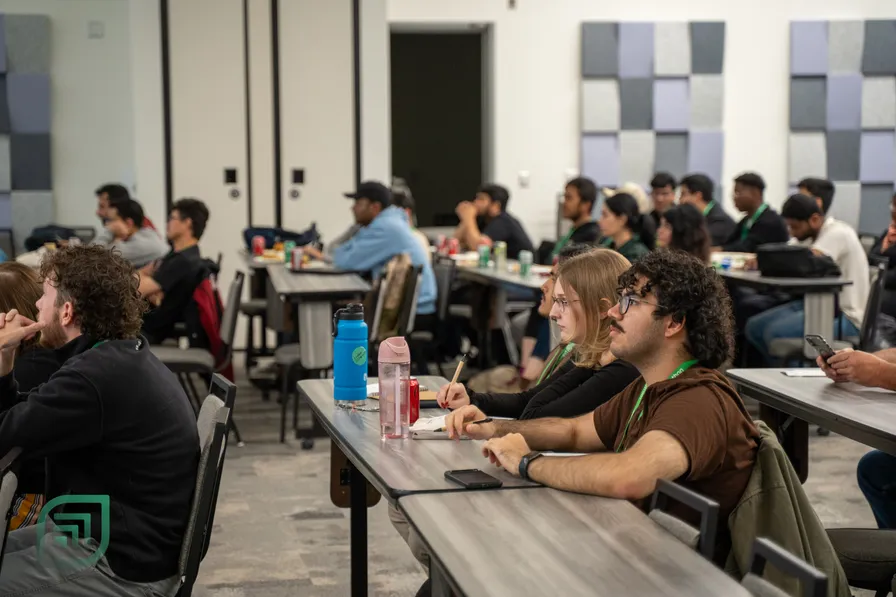 Nlight team at econext Ideathon 2025
 Turning Waste into Opportunity
NLight Recycling is tackling this challenge through chemical and mechanical processes designed to recover cotton fibres and polyester pellets from unusable and discarded textiles. In addition, opened fabrics represent an important output that expands material recovery pathways and creates a broader field of demand. By prioritizing mixed-fibre materials, we are able to improve process efficiency and maximize material recovery.
Beyond the technical work, NLight aims to bridge the gap between research and real-world application. As a student-led initiative, we bring academic innovation into practical use to reduce textile waste and support a more sustainable fashion system.
Collaborating with Local Organizations
Addressing textile pollution also means working locally. Currently, only about half of the textiles donated to thrift stores can be resold. Most unusable items are shipped out of the province or ultimately sent to landfills. NLight Recycling sees an opportunity to change that.
By collaborating with local organizations and utilizing locally generated textile waste, we aim to recover open fabrics, cotton fibres and polyester pellets that can be supplied to like-minded companies. In doing so, we hope to strengthen a circular economy within Newfoundland and Labrador- one that reduces emissions, keeps resources local, and reimagines waste as a valuable input rather than an environmental burden.
Textile pollution is a local, growing challenge with global consequences. Addressing it will require more than innovation alone; it will take collaboration, community engagement, and a shared commitment to change. NLight Recycling invites you to be part of this transition. Whether you are a community partner, a local organization, or a supporter of sustainable solutions, your involvement can help turn discarded textiles into valuable resources for Newfoundland and Labrador.