NLight Phase One: What Will Phase One Do?
NLight has a complex mission ahead of it. As part of our attempt to bring our vision to life, we have separated our Pilot Project into multiple phases. This post will discuss what the first phase of our project includes.
By Kassy Keats
Edited by Aria AzadiPour
Published on Mon May 04 2026
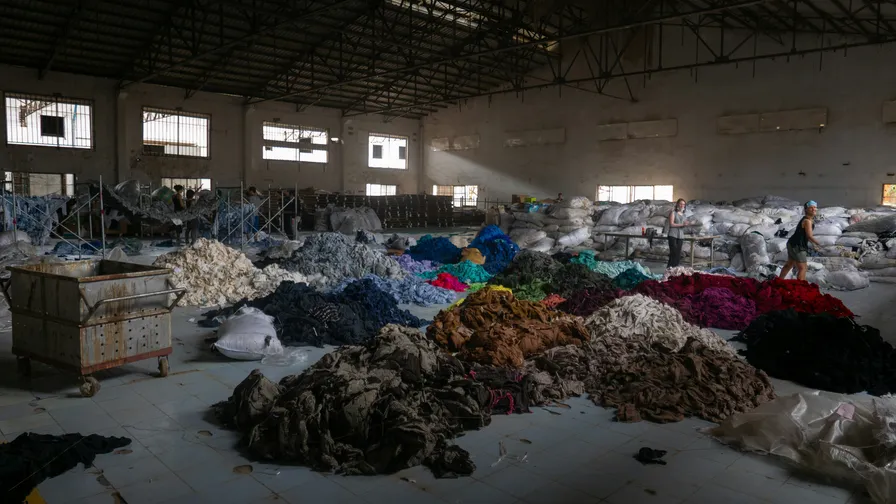 Bales of waste
 The first phase of the pilot project focuses on the processing of textile waste and early revenue generation through opened fibres. These steps are critical for preparing discarded textiles for reuse and future recycling.
1. Receiving & Sorting
Textiles collected from partner organizations will first be received and logged as they enter the facility. Tracking incoming materials will help NLight better understand the volume and composition of textile waste in Newfoundland and Labrador, generating valuable data that can support future recycling infrastructure.
Materials will then be staged for processing and prepared for the next steps in the system. In this step any large visible contaminants will be removed to ensure high output quality.
2. Cutting
Depending on the type of incoming textiles, garments may undergo an initial preparation stage to reduce textiles with contaminants (any metals, such as zippers) into smaller, more manageable pieces. This step helps ensure that materials can move efficiently through the system and prepares them for further sorting and treatment.
3. Contaminant Removal
All cut material from the previous step is automatically inspected to remove metal contaminants; then the contaminated material is manually inspected and contaminants removed allowing the textile material to re-enter the processing line whenever possible.
Removing contaminants is one of the most important steps in preparing textiles for recycling. If contaminants are not separated from textiles, the washing & drying machinery can be damaged.
4. Washing & Drying
In some cases, textiles will undergo washing and drying before further processing. This step helps remove dirt, oils, and other contaminants that may affect the quality of recovered fibres.
However, washing is not always required. Some end uses for opened textile fibres, such as industrial absorbent materials, do not require fully cleaned material. Because of this, the inclusion of washing and drying depends on the requirements of buyers.
5. Washing & Drying
Once textiles are prepared, they move into the mechanical processing stage, where fabrics are shredded and opened into loose fibres.
This process breaks down textiles and shreds textiles to produce opened fibres.
Opened fibres represent a valuable product. These fibres can be used in applications such as insulation materials, industrial textiles, and oil absorbent products, allowing textile waste to be diverted from landfills while creating a valuable recycled product.
6. Packaging & Dispatch
After processing, the opened fibres are collected, weighed, and packaged for storage or distribution to buyers.
Each batch is labelled and tracked to maintain transparency and ensure consistency in the materials produced.
Quality Control & Monitoring
Quality control plays an important role throughout the pilot phase.
To ensure the consistency and usability of recovered fibres, NLight will monitor factors such as:
- contamination levels of non-textile materials
- the size and consistency of opened fibre pieces
- fibre composition estimates
Tracking these characteristics helps ensure the materials meet the requirements of potential buyers while also improving process efficiency over time.
Supporting Systems & Facility Operations
Beyond the core processing steps, Phase 1 will also focus on facilitating safe and efficient facility operations.
This includes systems to manage dust and fibre particles generated during textile processing, as well as environmental considerations such as wastewater handling and moisture management. Proper ventilation, cleaning routines, and safe material handling practices will be important for maintaining both workplace safety and product quality.
 Newfoundland Shoreline
 Looking Ahead
Phase 1 represents the foundation of NLight Recycling’s long-term vision.
By establishing systems for textile collection, preparation, and fibre opening, this pilot phase will create the groundwork for future recycling stages that can recover recycled cotton fibres and polyester pellets from discarded textiles.
As the project evolves, NLight plans to expand into more advanced recycling pathways that allow blended textiles to be separated and converted back into high-quality raw materials.
Through this pilot project, we are taking the first step toward building a localized circular textile economy in Newfoundland and Labrador, one where textiles are no longer wasted, but continuously transformed into new materials.